


By: Julien LUSSIEZ
Part 3 of a 3-part series featuring speakers from the Paragon MBA Leaders Forum “Grow. Lead. Build.”
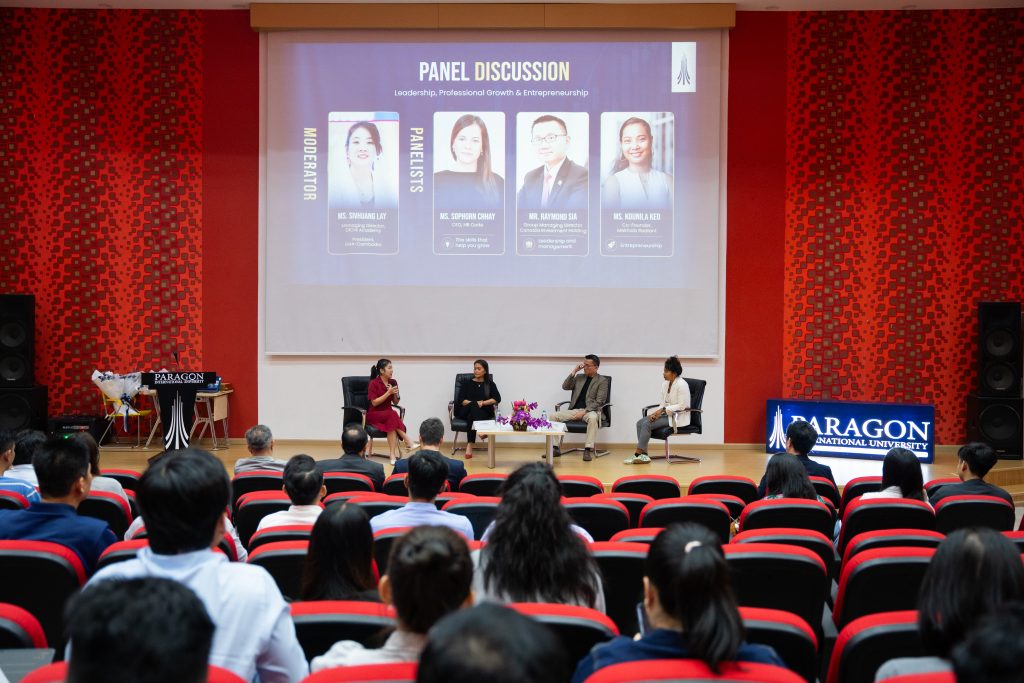
Kounila Keo closed the MBA Leaders Forum with a topic close to her own journey: female entrepreneurship in Cambodia. Co-Founder of Mekhala Radiant, a communications agency specializing in integrated marketing strategies, public relations, digital campaigns, and market research, Kounila built her career first as a journalist, reporting for AFP and other international publications for over six years and developing a sharp understanding of the Cambodian and wider Southeast Asian media landscape. She holds a Master’s degree in Public Policy from the Lee Kuan Yew School of Public Policy at the National University of Singapore, and in 2017 was recognized on the Forbes 30 Under 30 Asia list for her contributions to media and marketing.
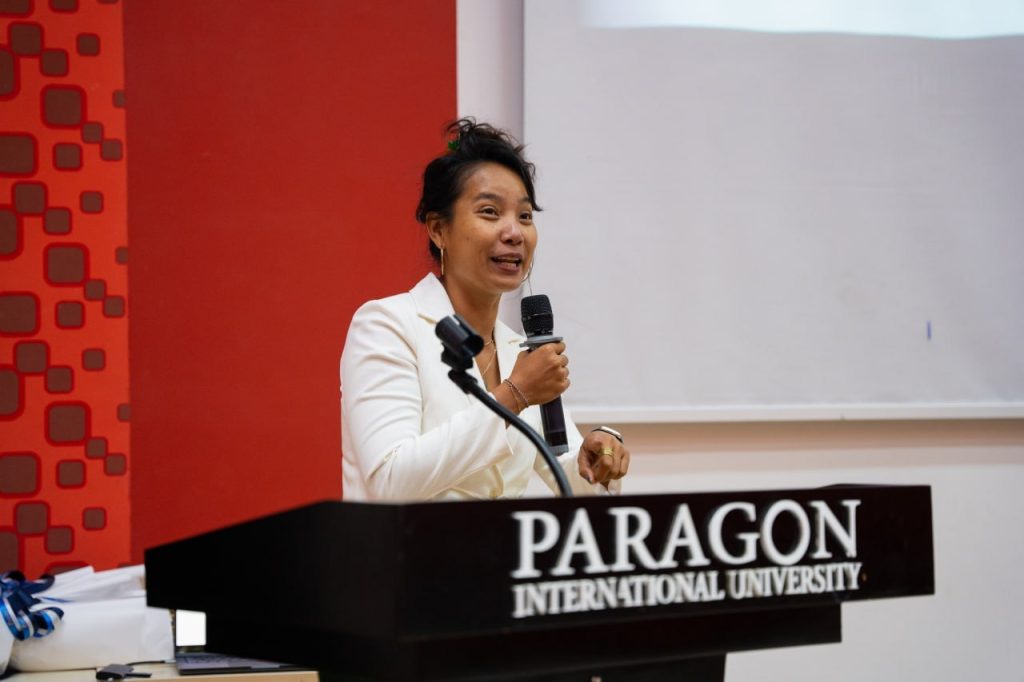
Her presentation, “Empowering the Future: Female Entrepreneurship in Cambodia,” made the case that women-led businesses are not a side story in the Cambodian economy but its backbone. She pointed out that Cambodia holds one of the highest rates of female-led businesses in the world, enterprises that are vital to household income and local economic stability. Yet she was equally direct about the challenge behind that statistic: most of these businesses remain micro-enterprises, and only 6.5 percent of female-owned businesses (2022 data from the government) are formally registered with the Ministry of Commerce. Formalizing, she argued, is what unlocks access to international markets, government support and subsidies, and the consumer trust needed to scale a brand. She closed with a line that captured her broader philosophy: entrepreneurship is not just about profit, it is about the resilience to solve problems for your community.
We invited Kounila to reflect further on the ideas behind her talk.
1. You’ve built a career across journalism, public policy, and now entrepreneurship. Was there a specific turning point when you decided to become an entrepreneur yourself?
My path has been a continuous evolution of seeking impact. As a journalist, I was telling stories about the world; in public policy, I was studying how to change it. However, I eventually realized that to truly drive change, I needed the autonomy to build solutions directly. The turning point wasn’t a singular moment, but rather the realization that entrepreneurship offered the most immediate, tangible way to apply everything I had learned about communication, media, and social dynamics. I wanted to move from documenting the landscape to actively shaping its future, which led to the founding of Mekhala Radiant Communications Co LTD.
2. You said only 6,5% of female-owned businesses in Cambodia are formally registered (based on the 2022 data from the government). In your experience, what is actually stopping women from taking that step, and what would it take to close that gap?
The barrier can be a combination of administrative complexity and a lack of clear incentive. Many women entrepreneurs are operating in “survival mode,” focusing entirely on daily revenue to support their families. For them, formalization feels like an added tax, burden, or bureaucratic labyrinth rather than an investment. To close this gap, we need to simplify the registration process, provide accessible education on the long-term benefits of compliance, and perhaps offer targeted subsidies or “growth packages” for newly formalized women-led enterprises. Formalization needs to be sold not as a compliance check, but as a gateway to capital and scale.
3. Cambodia has one of the highest rates of female-led businesses in the world, yet most remain micro-enterprises. What do you think is the biggest barrier preventing them from scaling into larger SMEs?
Based on my observation, the primary barrier is a lack of support tailored to the transition phase. Moving from a micro-enterprise to an SME requires a complete shift in operations, from financial literacy and legal structure to hiring and market strategy. Many women lack access to the professional networks and mentorship that guide this transition. We need more mentorship programs that focus specifically on the “growth mindset”, moving from managing a household business to managing a scalable company.
4. You closed your talk by saying entrepreneurship is about resilience, not just profit. What does that resilience look like day to day, especially for women entrepreneurs balancing business with other responsibilities?
Resilience, for me, is the discipline to keep showing up even when the immediate outcome isn’t visible. It is the ability to compartmentalize responsibilities without losing focus on the broader vision. On a practical day-to-day level, it looks like rigorous prioritization and the grace to accept that balance is not a fixed state, but a dynamic negotiation. It’s about remembering that the business is a vehicle for solving problems within our community. When you are rooted in that purpose, the inevitable challenges of entrepreneurship become problems to be solved rather than reasons to stop.
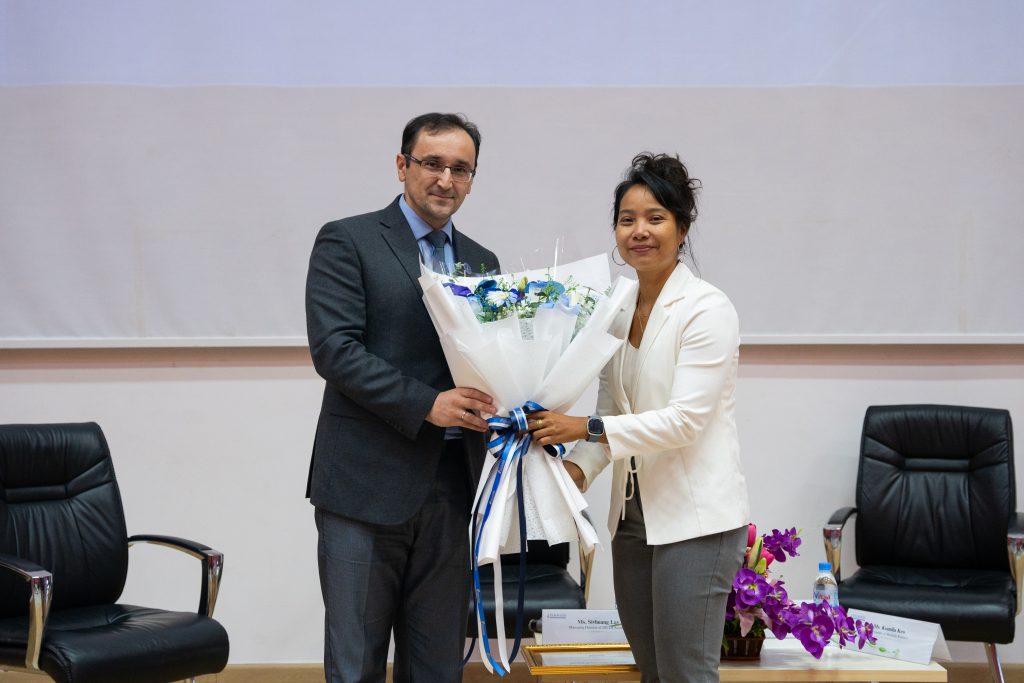
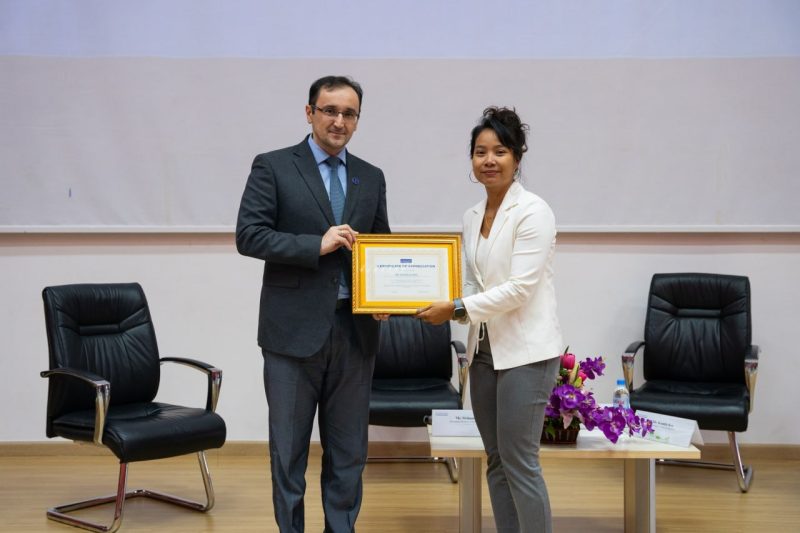
We thank Ms. Kounila Keo for generously sharing her experience, knowledge, and wisdom with our audience, and for her ongoing commitment to Paragon’s MBA community.
This article is part of Paragon’s MBA Spotlight series, featuring insights from speakers at the MBA Leaders Forum “Grow. Lead. Build.”
To learn more about our MBA and DBA programs, including program details and scholarship opportunities, join our Telegram group: https://t.me/+PXLvhItZJNU2ZWU1