


By: Julien LUSSIEZ
Part 2 of a 3-part series featuring speakers from the Paragon MBA Leaders Forum “Grow. Lead. Build.”
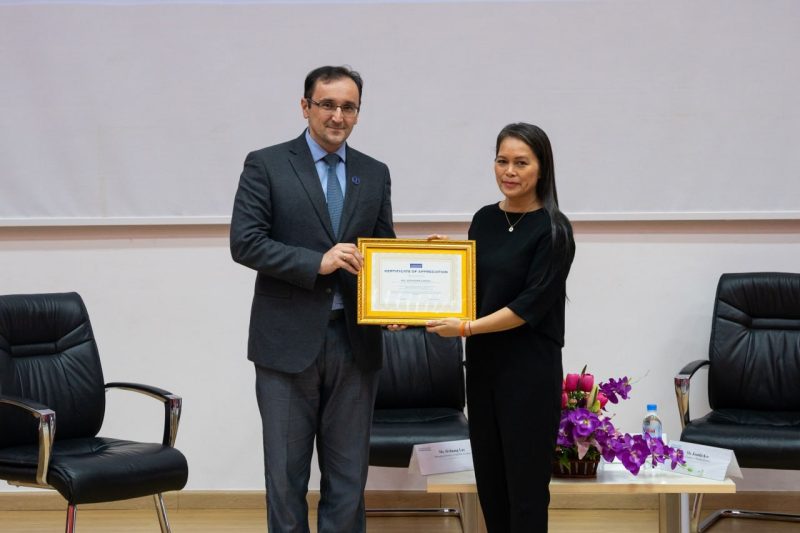
Few speakers at the MBA Leaders Forum brought a story as personal as Sophorn Chhay’s. A native Cambodian with French citizenship, she spent part of her childhood as a refugee in Thailand before growing up in France, supported at the time by the French Red Cross. After building a career across Singapore and France, and earning an MBA in Marketing along with a Master’s in Marketing and International Communication, she made the decision to return to Cambodia in 2016, coming back as an entrepreneur with a mission.
Since then, Sophorn has built over 20 years of experience across scientific research, luxury business, business associations, and education. She holds senior roles at the European Chamber of Commerce and the International Business Chamber Cambodia, and currently serves as CEO of HR Code, an HR consultancy supporting business development for SMEs and Multinational Companies across education, aviation, construction, and F&B. She is well connected to C-suite leaders across the region and contributes to the community as an advisory board member at Platform Impact and the French Consulate.
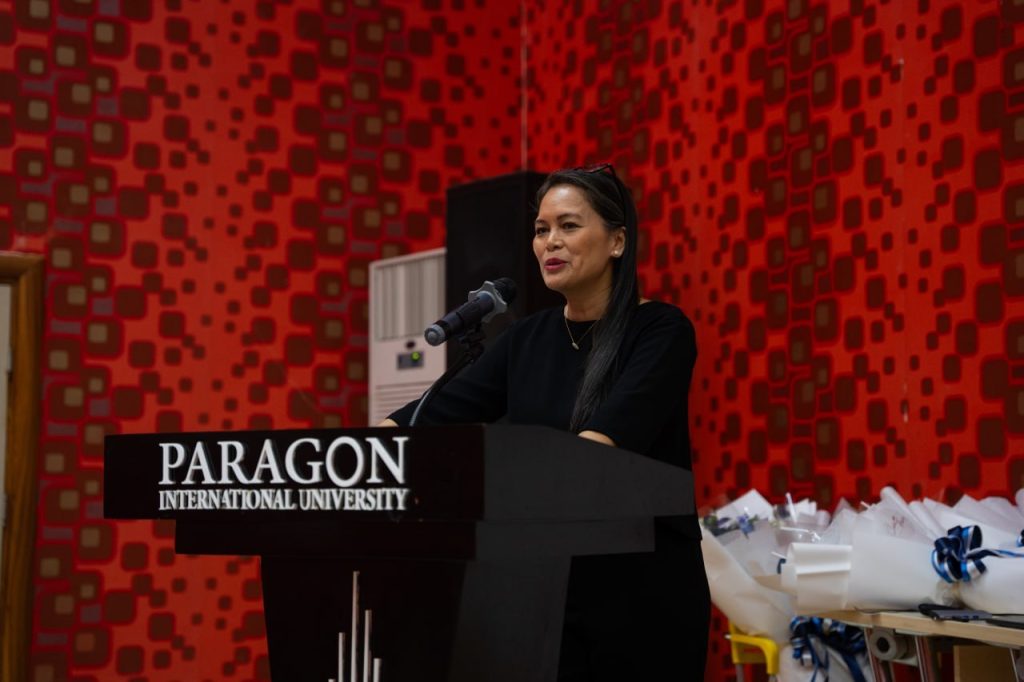
At the Forum, Sophorn’s presentation moved between the personal and the practical. She opened with her own story, framing it as proof that self-awareness and resilience are lived skills, not abstract concepts. She then introduced tools like MBTI, DISC, and OCEAN, along with a version of SWOT adapted for individuals, pushing students to ask what they avoid, what others see as their strength, and whether their industry is really still growing. She also spoke candidly about a gap she sees in the Cambodian market: a shortage of genuine sales skills built on real relationship-building rather than scripted pitching. She closed with three pillars of personal branding: verbal, non-verbal, and online presence.
We invited Sophorn to reflect further on the ideas behind her talk.
1. You spent part of your childhood as a refugee before growing up in France, and later chose to return to Cambodia as an adult. Looking back, how did that early experience of displacement shape the resilience you spoke about on stage?
My experience of displacement profoundly shaped my resilience by teaching me the importance of adaptability, perseverance, and a strong sense of purpose. Spending a couple of years during my early childhood in a refugee camp in Thailand, I faced uncertain circumstances and had to navigate new environments at a young age. This instilled in me unconsciously an understanding that challenges can be overcome through inner strength and flexibility.
Not all Cambodian families were as fortunate as ours as many lost family members during the genocide. But surrounded with love in my family and with care by charity organizations further reinforced my belief in the power of community and help.
Returning to Cambodia as an adult, I carried these lessons with me, using them as a foundation to pursue my entrepreneurial goals and contribute meaningfully to my homeland. I believe my story shows how adversity can cultivate resilience, shaping a mindset that embraces change and turns obstacles into opportunities for growth.
2. You introduced a SWOT framework for individuals rather than companies. Why do you think so few professionals take the time to apply this kind of structured self-assessment to themselves?
Many professionals find it difficult to engage in a structured self-assessment like an individual SWOT because they may not even be aware that such a tool exists or how it can be adapted for personal growth.
They often lead busy lives, with tight schedules and demanding workloads that make it hard to find time for self-reflection. Additionally, inner introspection can be uncomfortable; facing one’s weaknesses or areas needing improvement can stir up feelings of vulnerability or fear of negative feedback, which naturally leads people to avoid this difficult exercise.
Some also perceive these tools as more relevant to organizations than to individuals, underestimating their potential to foster personal development. Without clear guidance or a straightforward framework, many feel unsure about how to start or interpret their self-assessment, which further discourages them from trying.
However, if professionals begin to see self-assessment as an ongoing, valuable practice rather than a one-time exercise, they can gradually overcome these barriers. Embracing it to better understand themselves and guide their growth can lead to more meaningful self-awareness and resilience over time.
3. You mentioned that real sales skills, the kind built on genuine relationship-building, are still missing in much of the Cambodian market. What does that gap look like in practice, and how should young professionals start closing it?
Young professionals in Cambodia should focus on building genuine relationships by respecting cultural values like trust and community. They should practice active listening and empathy, investing in long-term customer relationships, learning from successful street or corporate vendors, practicing authenticity and transparency, and seeking mentorship. These approaches help transition from transactional sales to meaningful, trust-based connections, fostering sustainable and credible businesses that deliver product knowledge based on Customer’s need.
4. Of the three pillars of personal branding you presented, verbal, non-verbal, and online presence, which one do you see MBA students underestimate the most?
The three components of personal branding each hold significant importance; however, it is essential for students to be trained during their curriculum to introduce themselves with clarity regarding their expertise, career aspirations, and interests. Such introductions set the tone for professional interactions and are often encapsulated in an elevator pitch—a skill that, while challenging, is crucial to master.
To craft a compelling elevator pitch, students must develop a deep understanding of their strengths, goals, and core values. It’s not merely about listing credentials or achievements; rather, it’s about creating a cohesive narrative that effectively highlights their expertise and career ambitions.

MBA students often underestimate the power of non-verbal communication. While they may recognize the importance of verbal skills and maintaining an online presence, many overlook how body language, facial expressions, posture, and other non-verbal cues significantly influence perceptions. Non-verbal communication can reinforce or undermine their message, impact their credibility, and shape how others perceive their confidence and professionalism. By becoming more attentive to these signals, MBA students can strengthen their personal brand and enhance their effectiveness in professional interactions.
We thank Ms. Sophorn Chhay for generously sharing her experience, knowledge, and wisdom with our audience, and for her ongoing commitment to Paragon’s MBA community.
This article is part of Paragon’s MBA Spotlight series, featuring insights from speakers at the MBA Leaders Forum “Grow. Lead. Build.” Look out for our next spotlight, featuring more perspectives on leadership and career growth.