


By: Julien LUSSIEZ
Part 1 of a 3-part series featuring speakers from the Paragon MBA Leaders Forum “Grow. Lead. Build.”
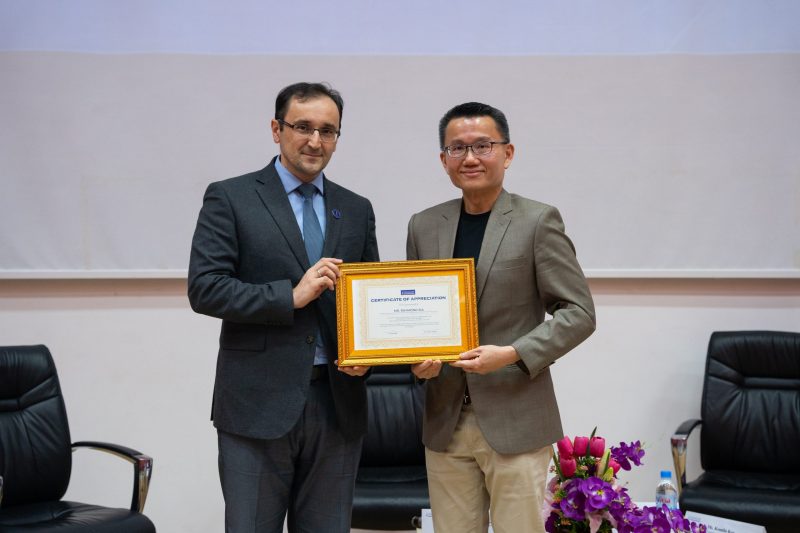
When Raymond Sia took the stage at Paragon’s MBA Leaders Forum, he brought with him more than three decades of banking leadership across Cambodia, Malaysia, and Vietnam. Currently Group Managing Director of Canadia Investment Holding, and CEO of Canadia Bank from 2018 to 2025, Mr. Sia has spent his career building institutions and, along the way, forming sharp views on what separates genuine leaders from the merely titled.
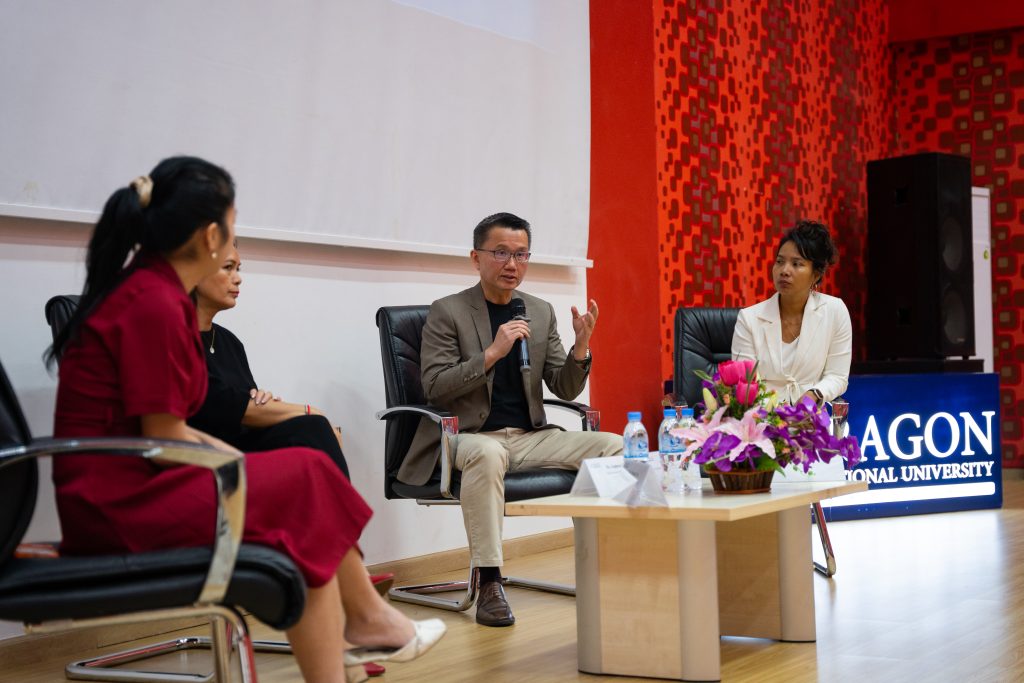
Under his leadership, Canadia Bank collected 29 banking awards, including two Best CEO and Best Managed Bank honors from The Asian Banker in 2022 and 2025, an award given only once every three years. He also chairs Credit Bureau Holding (Cambodia) and has served as both Chairman and Vice Chairman of the Association of Banks in Cambodia. Since 2024, he has written a monthly column, “Right Angle,” for the Khmer Times. He is also a member of Paragon International University’s MBA Advisory Board.
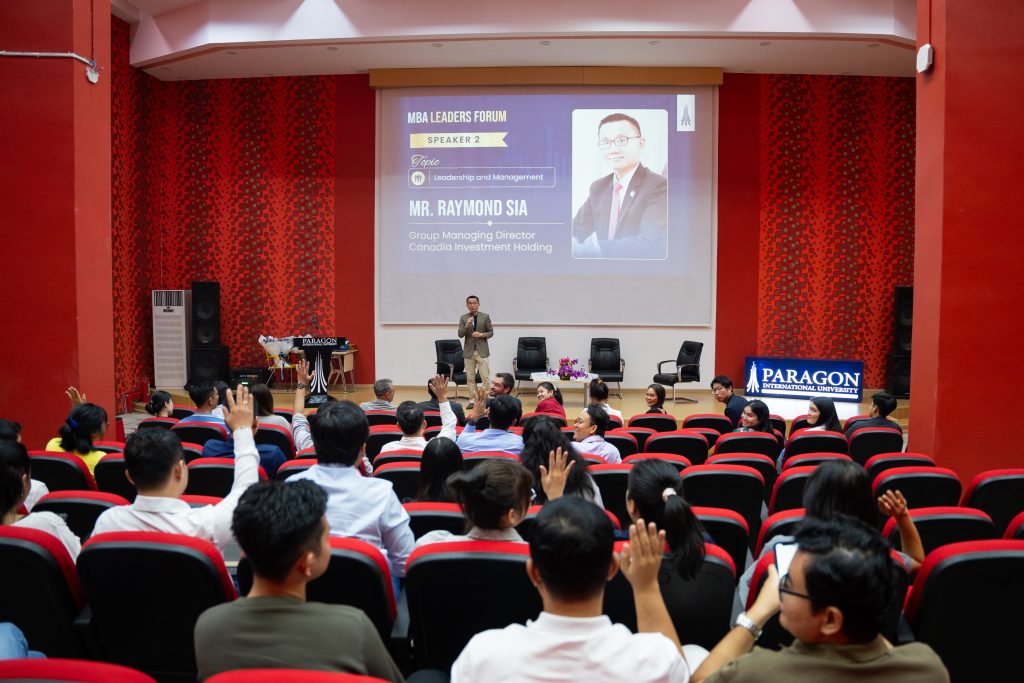
At the Forum, Mr. Sia’s message centered on a simple but demanding idea: leadership is built on ownership, humility, and constant learning, not on rank. He was direct about the traits that undo leaders fastest, naming ignorance and arrogance as the two most damaging qualities a leader can carry. In his view, respect is earned rather than assumed, and a leader can only give to others what they themselves possess, whether that’s knowledge, integrity, or discipline. He also spoke about pursuing excellence while accepting imperfection, a balance he described as central to sustainable leadership rather than a contradiction.
We invited Mr. Sia to reflect further on the ideas behind his talk.
- You highlighted ignorance and arrogance as two of the worst traits in a leader. Why do you think these two qualities are especially damaging in leadership?
“Ignorance” and “Arrogance” are not only the worst traits in any leader but these traits are also the worse traits in any employee in any organization. When a leader is oblivious and stays ignorant and not take the effort to learn, it is a recipe for disaster. The same notion for leaders who are arrogant and not able to accept the fact they do not know everything.
For a leader to lead effectively, one must be competent in the subject matter related to their roles. As I had shared also that “respect has to be earned”; we could encounter people being appointed to leadership roles in organization; not from meritocracy but due to their patronage or relationship. There will be differing views on how effective such leaders are but the onus is on the newly-appointed leader to ensure he/she urgently learns-up the tools-of-the-trade and subject matter to be able to show to the team the value they bring to the team / organization. Respect will diminish over time from team members when they do not see tangible value from their leader(s) and what is little left of “respect” is merely just a title.
Leaders who act that “I already know everything” are equally dangerous to any organization. All leaders should cultivate a mindset of constant-learning and accepting the fact “we do not know everything” and “we could be wrong at times”.
Leaders should learn to control and manage their egos and to be grounded irrespective of how successful they are. It is also fine to make mistakes as no one is perfect but as an effective & progressive leader, one has to learn not to repeat the same mistakes twice.
2. You have led banks across Cambodia, Malaysia, and Vietnam, each with different cultures and
business environments. What has this experience taught you about adapting your leadership style
while staying true to your core principles?
Core values & principles are important to any leader and these should translate to actions & behaviors in their day-to-day activities. We must always be mindful that every country and culture is unique with its own peculiarities and an effective leader must always be respectful of them and work alongside these peculiarities.
I am grateful to have been able to work in 3 different & beautiful countries and continue to learn and appreciate the differences in working culture. Practicing empathy and mindfulness (alongside the core values & principles) will enable one to thrive in any role in a new country.
3. During your presentation, you said that “you can only give what you have.” Early in your career, what did you feel you still needed to build, and how did you develop it over time?
In the early part of my career, I continuously acknowledged and accepted the fact that there were new areas of learning and many areas of improvement that was needed and I was determined to learn, un-learn and re-learn if the need arises.
I was also blessed to have supportive line managers / superiors in my career journey who guided me.
If I were to select one area or trait which I was focus-on in my early career days, I would select empathy and the ability to put ourselves in the other parties’ position. This helped me a lot in my younger days (and even now) to better manage people & teams and with a perspective to seek a win-win proposition for all parties.
We need to be mindful that a win-win proposition is never a balanced and equal position. There will be instances where we need to “give more than we get” and vice versa.
4. For MBA students who may still be far from senior leadership positions, what does “being an owner” mean in a junior or middle-management role where they may not yet have formal authority?
As I had shared, it is never too early for anyone to have an “ownership mindset”. Even a new joiner in any organization can practice this trait. This means taking pride and responsibility for all our work. Any work-related matters that originates from us would need to be thoroughly checked before they are forwarded to our superiors.
“Being an Owner” mindset and behavior cuts across ranks in organizations
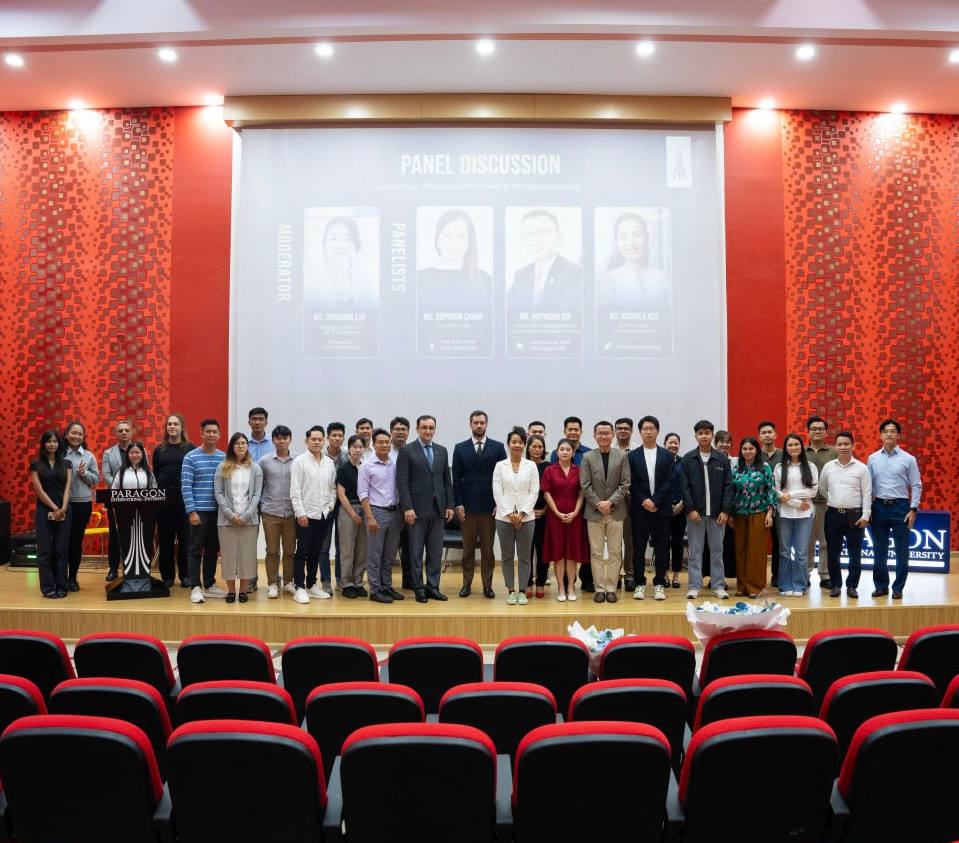
We thank Mr. Raymond Sia for generously sharing his experience, knowledge, and wisdom with our audience, and for his ongoing commitment to Paragon’s MBA community.
This article is part of Paragon’s MBA Spotlight series, featuring insights from speakers at the MBA Leaders Forum “Grow. Lead. Build.” Look out for our next spotlight, featuring more perspectives on leadership and career growth.
To learn more about our MBA and DBA programs, including program details and scholarship opportunities, join our Telegram group: https://t.me/+PXLvhItZJNU2ZWU1